

Gifting has never been easier
Perfect if you're short on time or are unable to deliver your gift yourself. Enter your message and select when to send it.


The Moro reflex, also sometimes referred to as the "startle reflex" is one of the most primitive reflexes a baby is born with. When triggered, your baby will suddenly fling their arms outward, extend their legs, and quickly pull back in, sometimes crying in the process.
It's completely involuntary, and it's a sign of a healthy nervous system. According to the NIH, the Moro reflex is present from as early as 25 weeks gestation and its absence at birth is considered clinically significant so seeing it is a good sign. If you're ever unsure, it is always worth talking to your chosen medical professional for personalized advice.
The Moro reflex doesn't distinguish between a real threat and a peaceful bassinet. It can happen at anytime or that slight sensation of being lowered into a crib can be enough to trigger it - which is why so many babies fall asleep in your arms and wake the moment they're put down.
It can be frustrating (especially if you have been waiting patiently for a shower or a snack) but it's helpful to note as it's a reflex, working with it, not against it - is the best way to protect your sleep and their development at the same time.
The Moro reflex typically begins to fade around 12 weeks and disappears completely by 6 months as your baby's nervous system matures. This is also when the 4-month sleep regression hits — so having a swaddle transition plan ready before then means you're not caught off-guard when both happen at once.
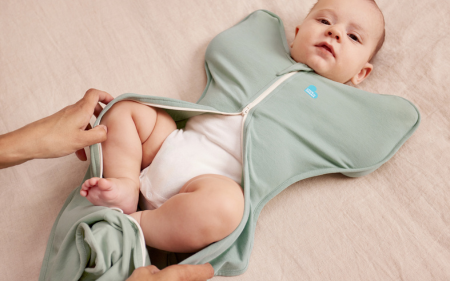
Swaddling is one of the most effective ways to help your baby sleep through the startle reflex. By gently wrapping your baby, you:
*Always follow professional feeding guidelines for your baby. Most newborns require feeds every 2-4 hours.
Yes, when done correctly. Both the AAP and First Candle recommend the following:
When looking for a swaddle for your newborn, consider ease of use, safety and quality. Here's what that actually looks like in practice:
✓ Calms the Moro reflex without suppressing it so the reflex can still develop naturally, but won't jolt your baby out of a deep sleep
✓ Allows an arms-up sleep position giving baby access to their hands to self-soothe, just like they did in the womb
✓ Recreates womb-like security the snug, familiar feeling that newborns find instinctively calming
✓ Keeps baby safely on their back in line with AAP safer sleep guidelines
✓ Has genuine stretch and give so baby has freedom of movement within the swaddle, not just containment
✓ Supports a still-developing nervous system giving it a gentle, consistent boundary in a world that suddenly feels very wide open
The startle reflex is one of the first little challenges of new parenthood and like most of them, it's temporary. With the right knowledge and the right swaddle, those early weeks of broken sleep become a little more manageable for everyone.